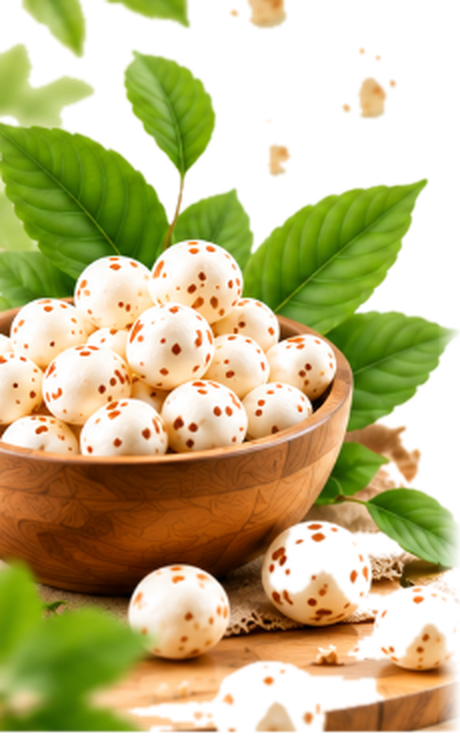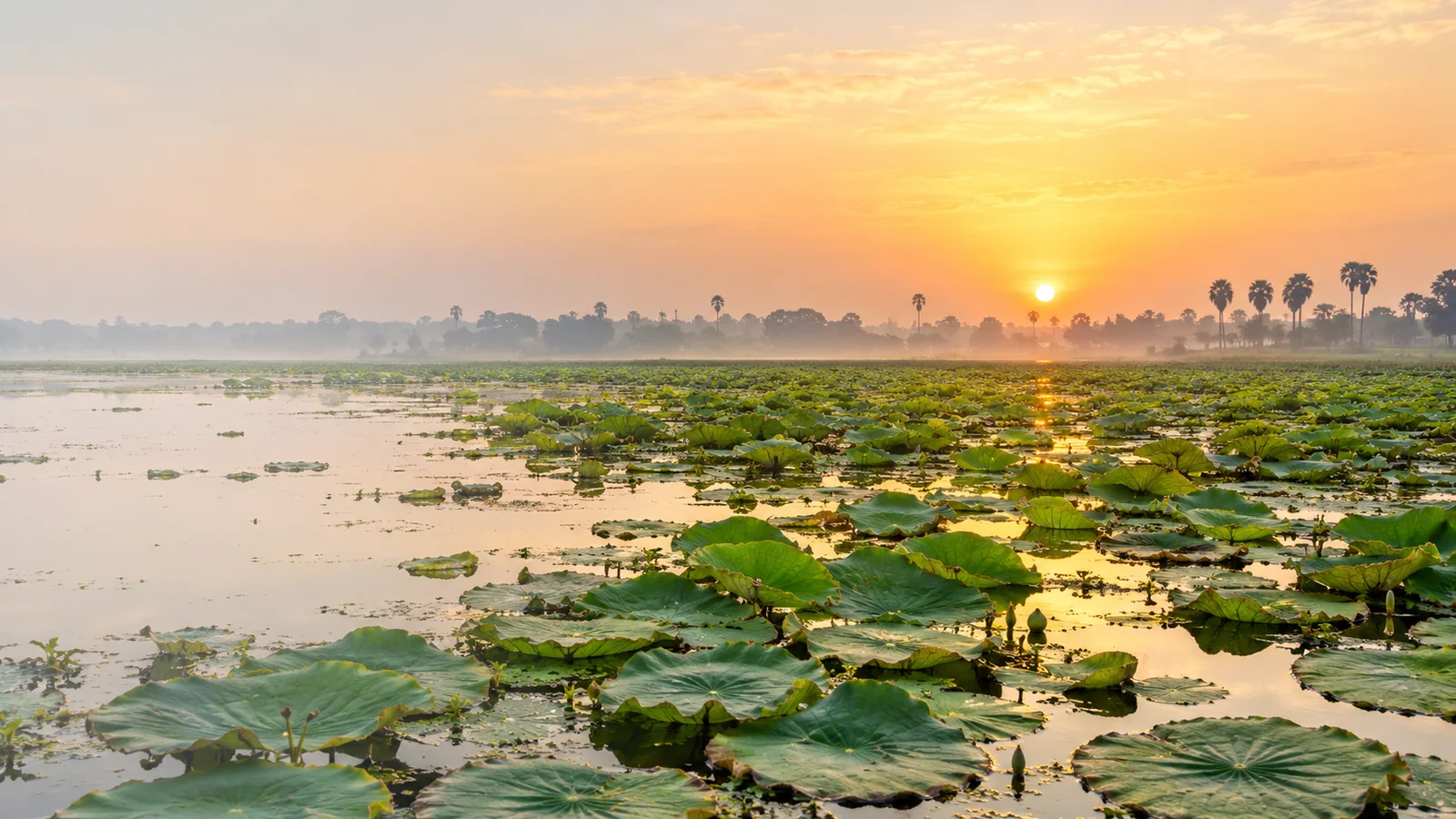
Most of India's makhana comes from the wetlands of north Bihar, especially the Mithila region. Here, the broad, floating leaves of the Euryale ferox plant cover ponds through the warm months, and the seeds that form beneath the water are what eventually become the makhana in your bowl.
Gathering seeds from the pond bed
Once the fruits ripen, they burst and the seeds settle at the bottom of the pond. Farmers wade in and gather them by hand from the muddy bed — skilled, physically demanding work that has been passed down through families for generations.
From seed to pop
- The collected seeds are washed and cleaned of mud.
- They are sun-dried and graded by size.
- The seeds are roasted in batches over high heat.
- While still hot, each seed is struck so the hard shell cracks and the kernel pops into the familiar white makhana.
- The popped makhana is sorted again by size and quality before packing.
Every handful of makhana carries hours of careful work — from the pond, to the fire, to the pack.
Why sourcing matters to us
At ETSFoods, we work closely with farmers in Bihar so that this craft is valued fairly. Buying directly and grading carefully means you get consistent, premium makhana — and the families who grow it share in that value.